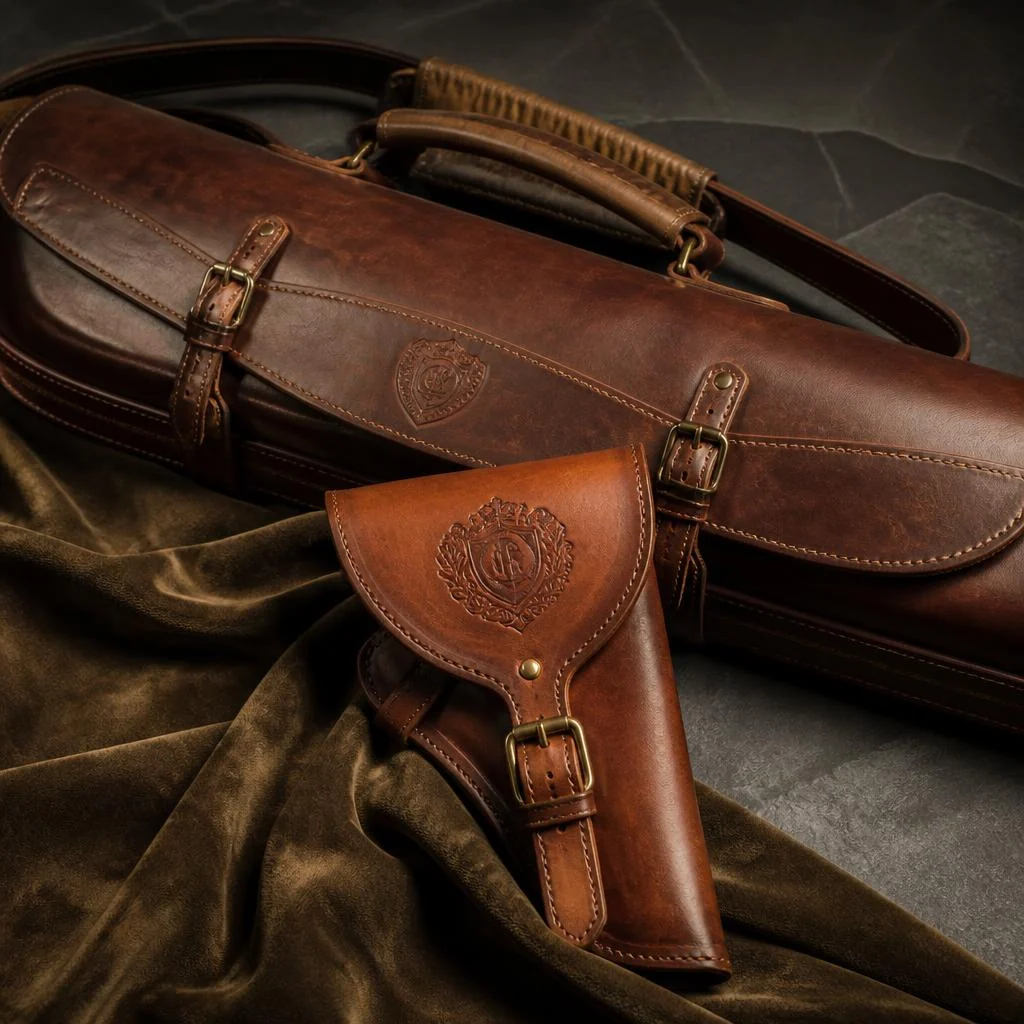
Which woods take wire inlay best?
Dense, tight-grained timbers — walnut, ebony and exhibition-grade burl — hold a crisp channel. Soft or open-grained woods can be inlaid but the line is less precise.

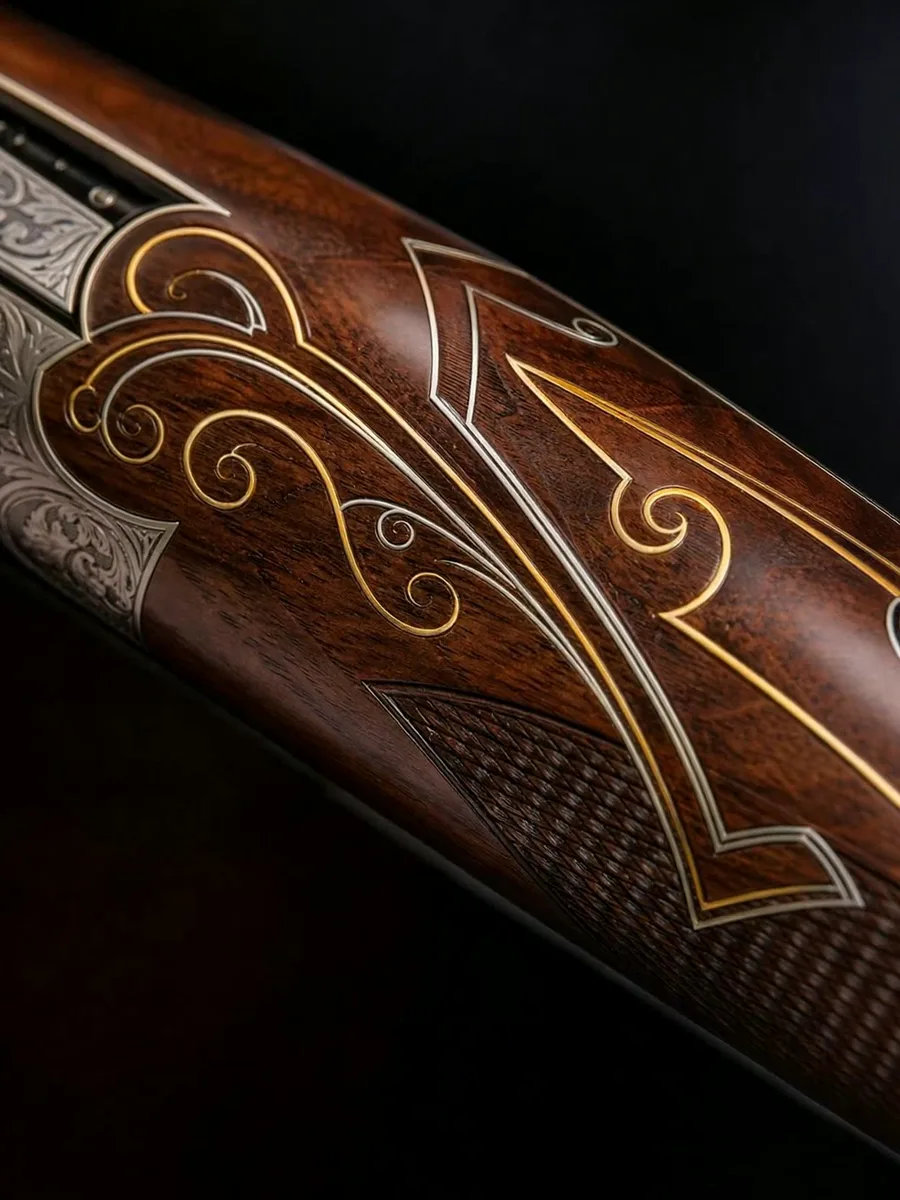
II. · خيط من الذهب يجري في الخشب
النسخة العربية الكاملة لهذه الصفحة قيد الإعداد. النص أدناه باللغة الإنجليزية.
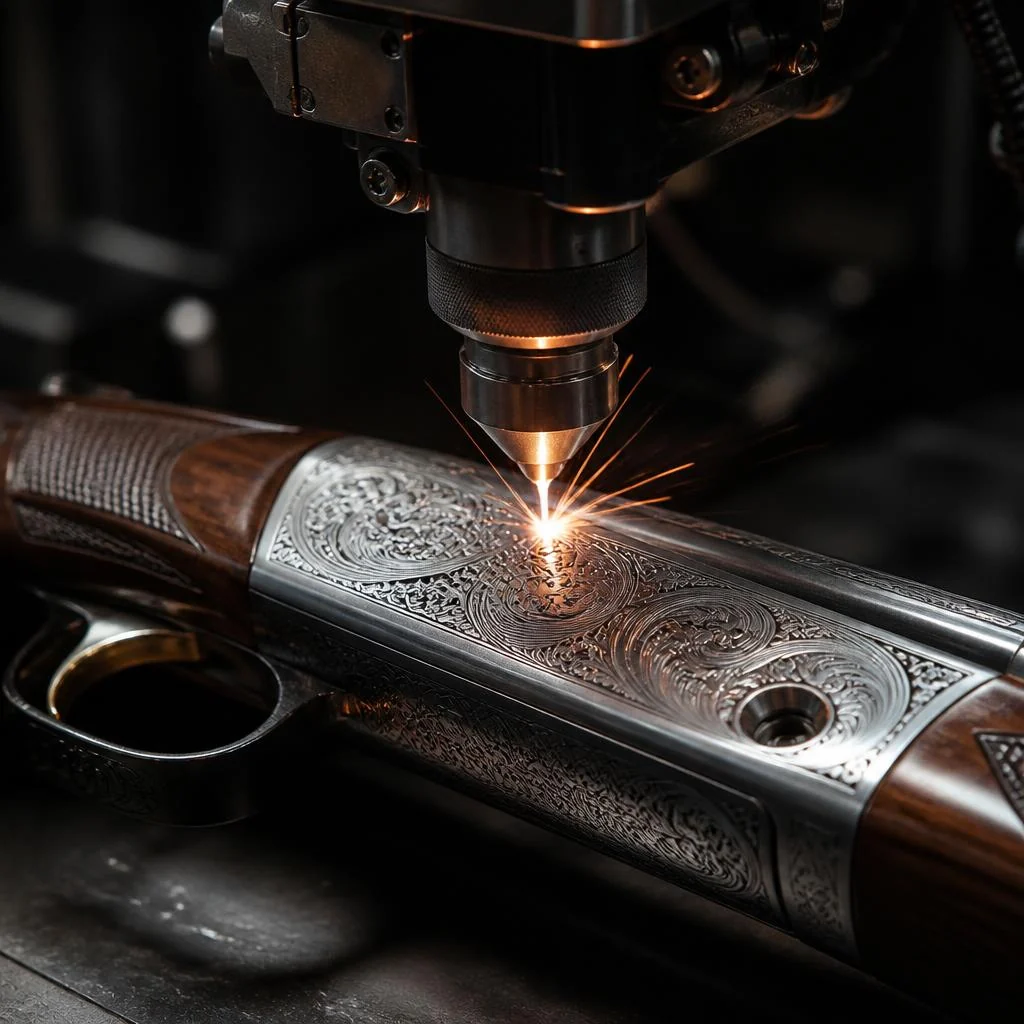
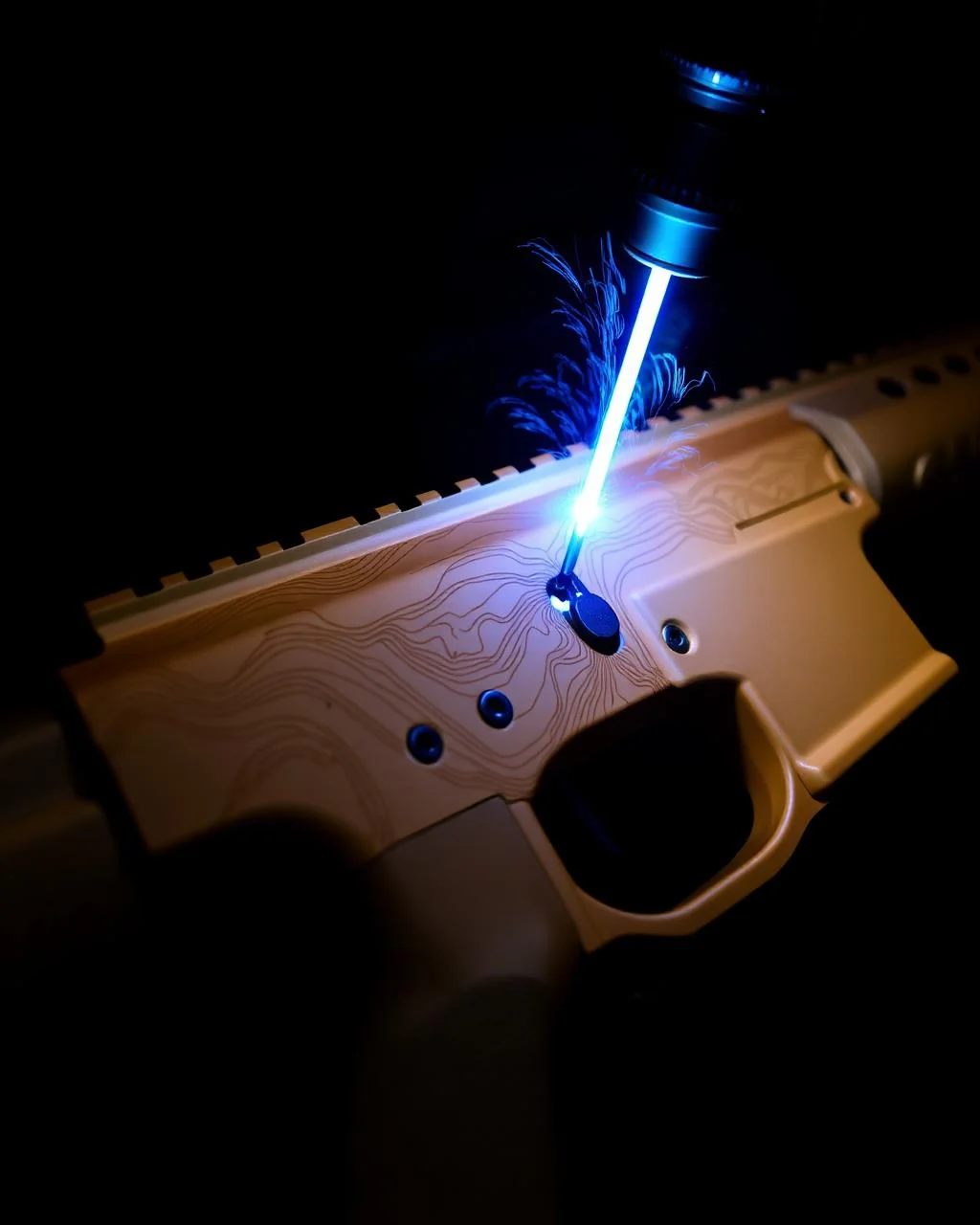
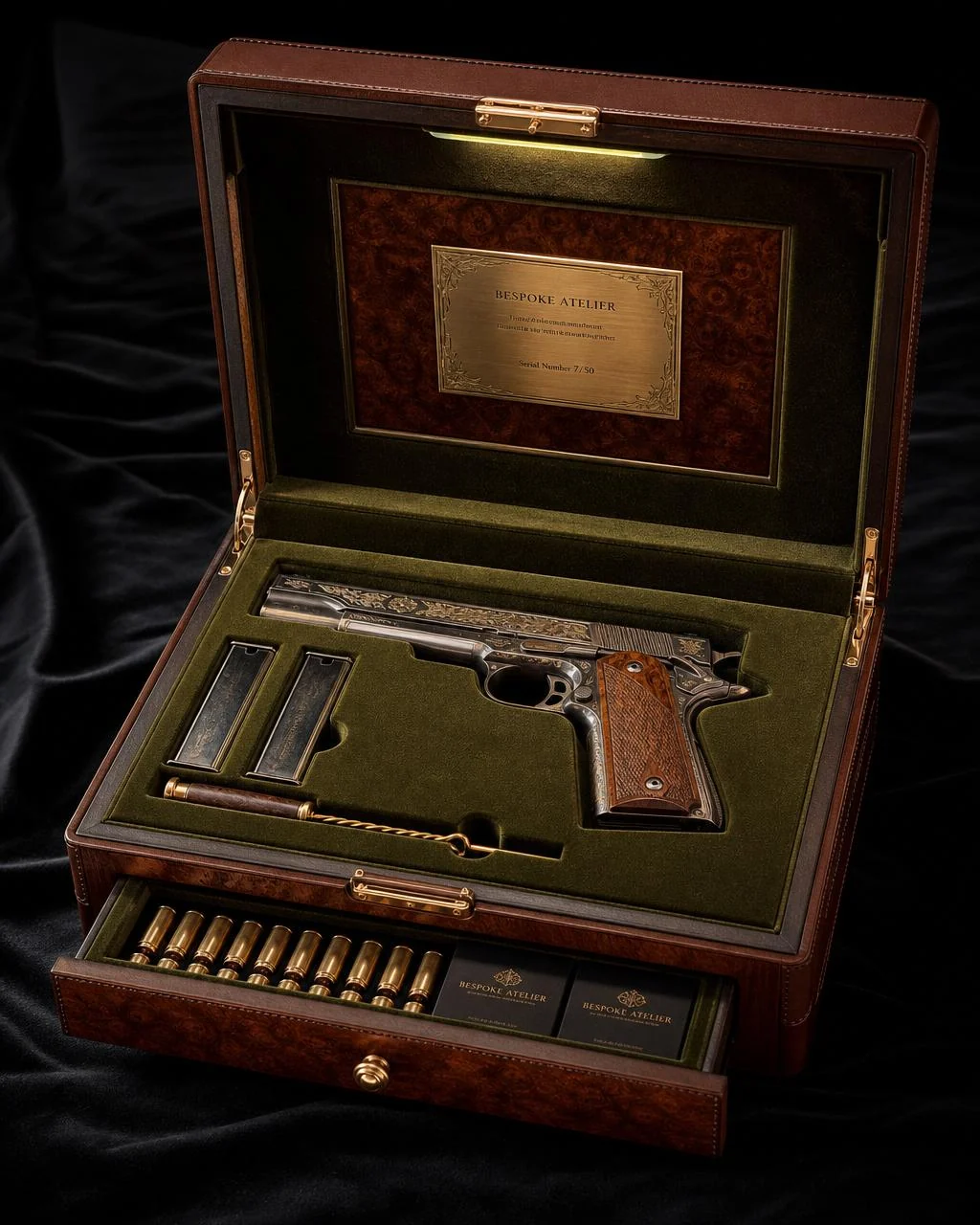
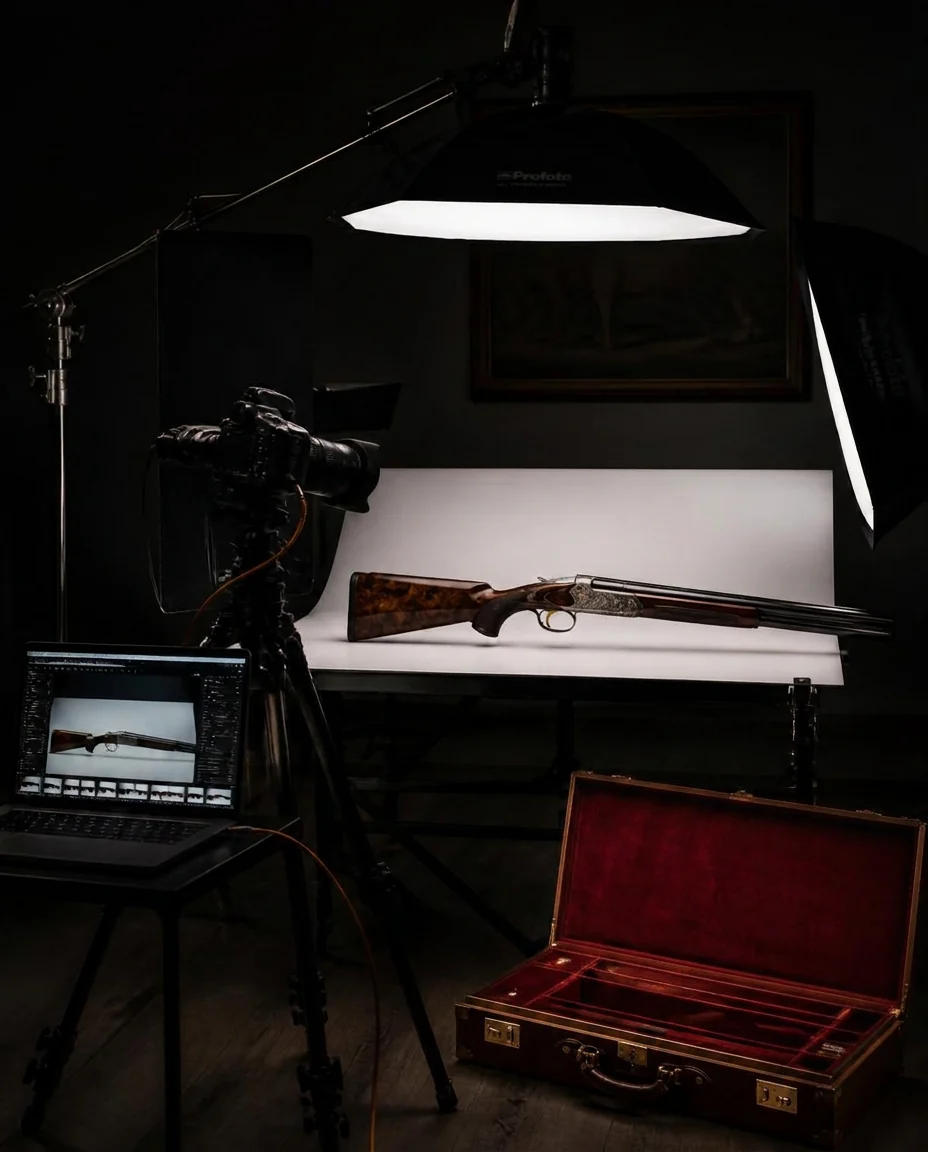
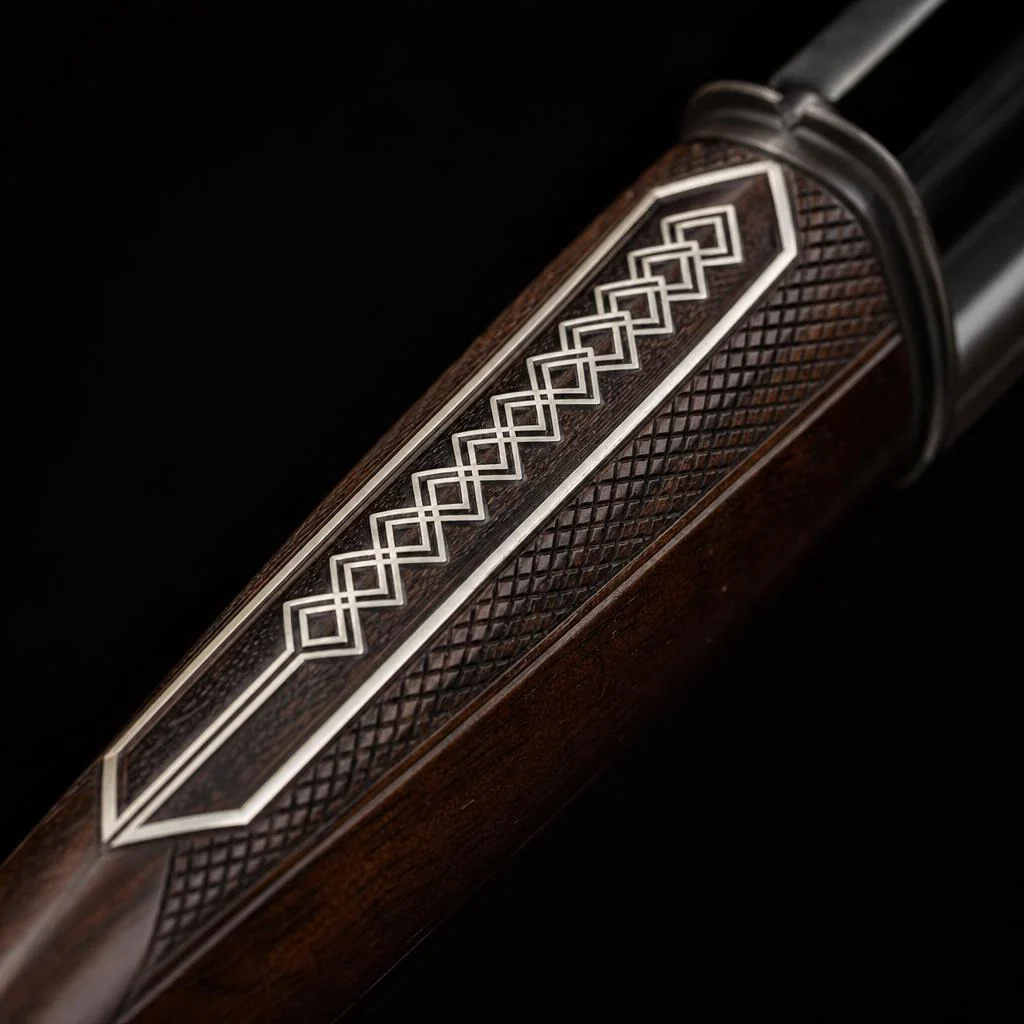
Fine metal wire inlays into carved grooves in the wood. Our stockers hand-cut channels into walnut, ebony, exhibition-grade burl and exhibition blanks, then bed precious wire — 24K gold, sterling silver, brass and platinum — before burnishing flush and sealing with oil or lacquer. The result is a seamless, metallic thread that follows the grain and catches light like a signature. Inlay is usually drawn as one composition with the engraving on the metal, and the finished stock is shown in a fitted presentation case.
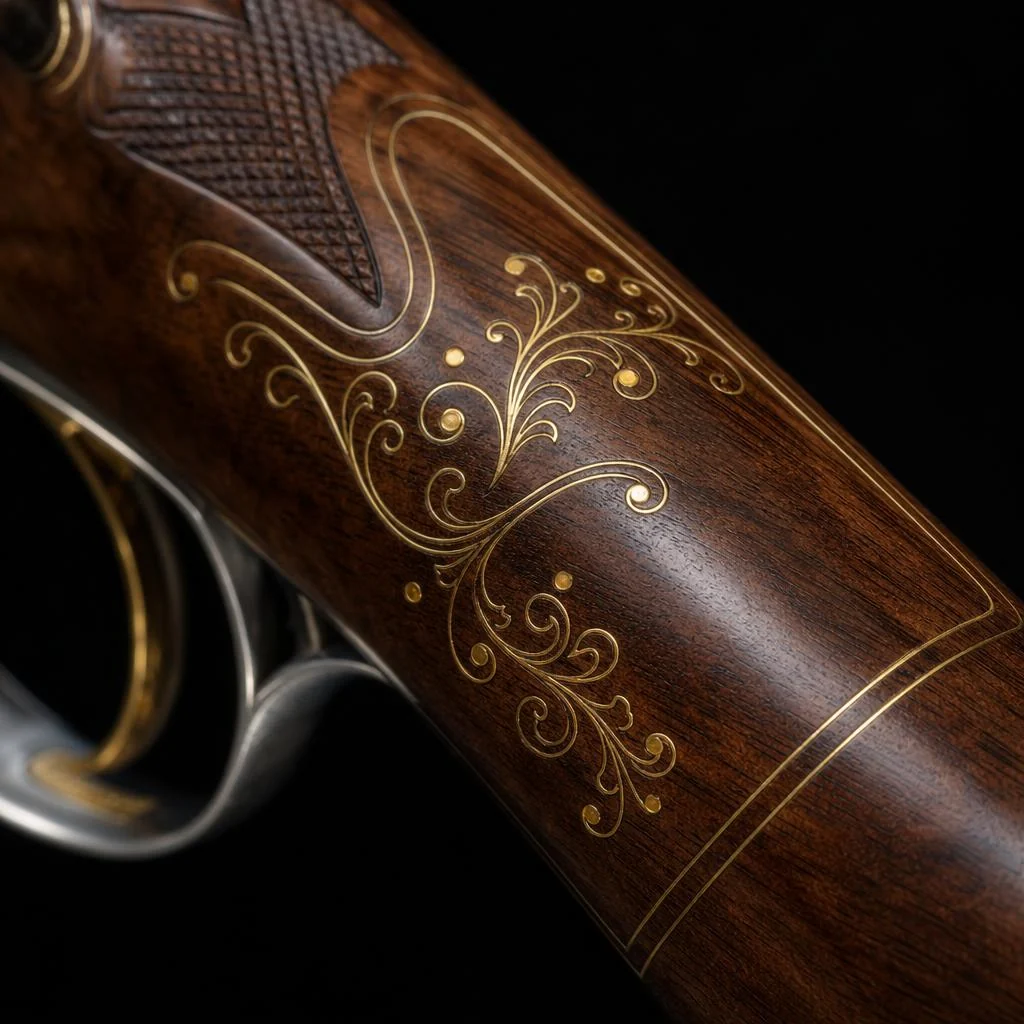
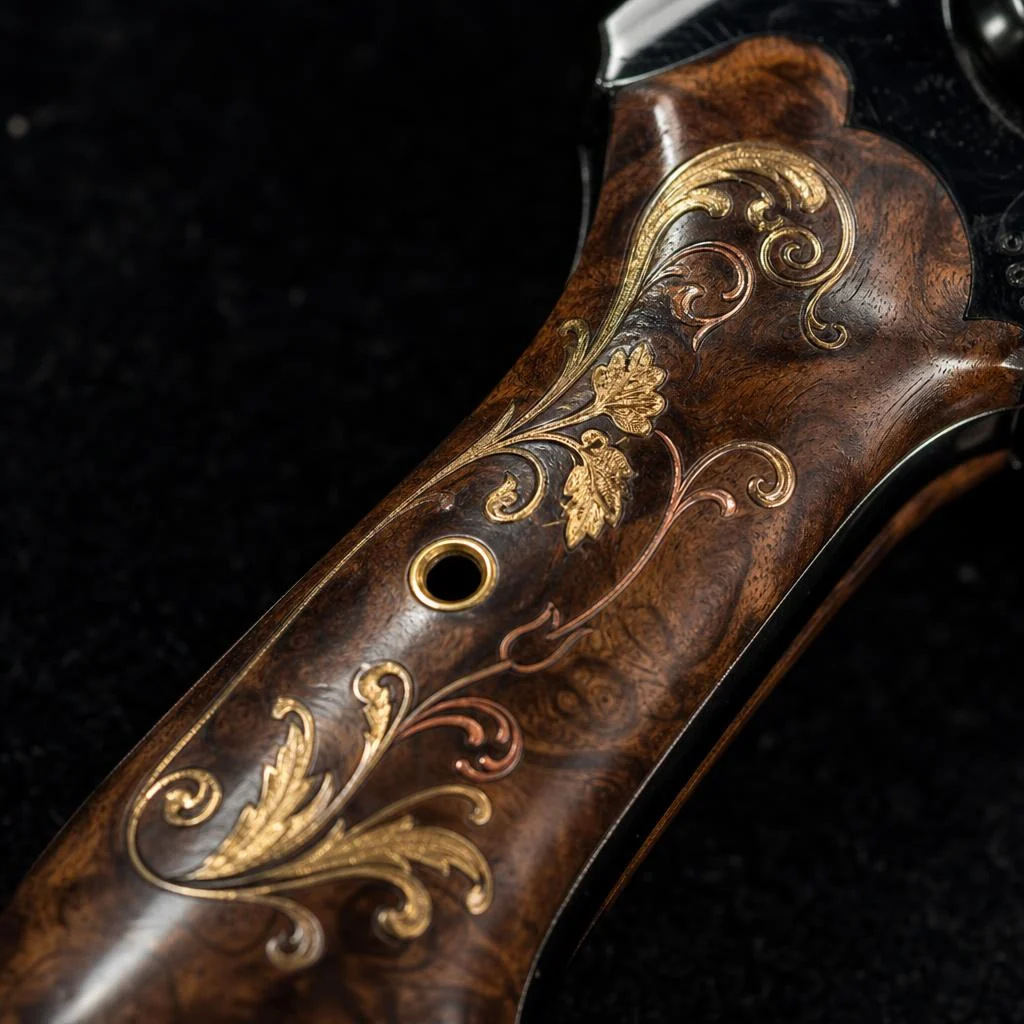
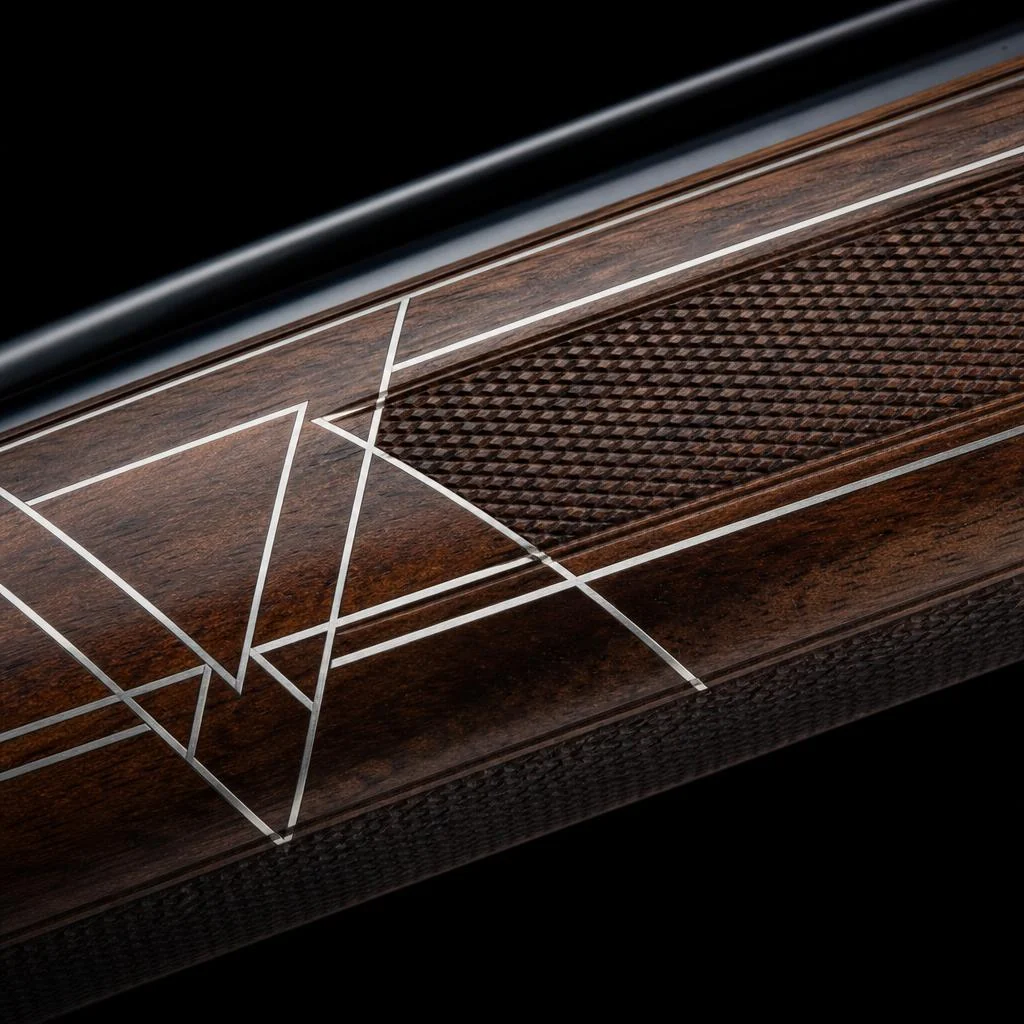
The blank is read first — grain direction, figure and density decide where a line can run and where it would break.
Channels are cut by hand, undercut so the wire locks mechanically rather than relying on adhesive.
Gold, silver, brass or platinum wire is bedded and tapped home, then burnished until it sits perfectly flush with the surface.
The stock is finished in oil or lacquer, building slowly so the metal stays bright and the grain keeps its depth.
Dense, tight-grained timbers — walnut, ebony and exhibition-grade burl — hold a crisp channel. Soft or open-grained woods can be inlaid but the line is less precise.
No. Channels are undercut so the wire is locked mechanically, then burnished flush and sealed. It is a technique that has survived on two-hundred-year-old stocks.
That is how most projects are designed — one composition running from the steel into the wood, so the piece reads as a single object.
Bring the piece to the atelier and we will tell you plainly what can be matched. Older work can often be extended once the alloy and pattern are read.
للمزيد، راجع الأسئلة الشائعة كاملة.
بموعد مسبق فقط